
Eighth EpiSeedLink Newsletter
EpiSeedLink Newsletter 8 – February 2026 🌱
We are pleased to announce the release of the eighth edition of the EpiSeedLink Newsletter.
🥳🚀 EpiSeedLink is reaching an exciting milestone! In February 2026, we have hosted our first public international conference, bringing together the consortium and the broader scientific community to explore the latest advances in:
🌱 Seed‑to‑seedling transition
🌿 Environment & stress responses
🧬 Epigenetic memory & chromatin regulation
🌾 Crop breeding & priming strategies
In this 8th EpiSeedLink Newsletter, we introduce the eight invited speakers who have joined us at the conference:
▶️ Björn Usadel — Heinrich Heine University Düsseldorf, DE
▶️ Isabel Bäurle — University of Potsdam, DE
▶️ Julia Qüesta — Centre for Research in Agricultural Genomics, ES
▶️ Leonie Bentsink — Wageningen University, NL
▶️ Pablo Manavella — Institute of Subtropical and Mediterranean Horticulture, ES
▶️ Salma Balazadeh — University of Göttingen, DE
▶️ Stefan Scholten — University of Göttingen, DE
▶️ Steve Penfield — John Innes Centre, UK
The event has also featured poster sessions and presentations from our fellows, showcasing the results of three years of PhD research, along with contributions from external scientists. We welcomed more than 150 participants from the scientific community around the world.
📩 Discover more in the new EpiSeedLink Newsletter.
Read the full Newsletter 8 here
Stay tuned for more updates as we continue the journey of EpiSeedLink!
If you would like to receive the EpiSeedLink Newsletter directly, please contact us at episeedlink@cnb.csic.es.
Frontal Image designed Freepik (<a href=”https://www.freepik.es/foto-gratis/papeles-blanco-paja-decorativa-mesa_3624218.htm”>Imagen de freepik</a>)


Meet Our PhD Fellows: Sharing Their Passion for Science_8
Our EpiSeedLink PhD students are stepping in front of the camera to share their passion for science and give you a glimpse into their research within the project.
Training in Science Communication
As part of their training in science communication and public engagement, our EpiSeedLink PhD students are creating short videos to present their research and key scientific topics from the project.
Video Series
These videos are posted every two weeks on EpiSeedLink’s social media channels, giving the public a front-row view of the research questions and discoveries of the next generation of scientists.
This series highlights the commitment of our fellows to making plant science accessible, engaging, and relevant to a broad audience. We invite you to follow the episodes as we continue showcasing the people and research behind EpiSeedLink.
Eighth Video Spotlight
🌱 A Day in the Life of a Marie Curie PhD Student🌱
We are pleased to announce the release of the eighth video in the EpiSeedLink (MSCA-DN-2021) science communication series. This new episode has been created by Nora Pasquali de Medici, PhD Fellow at the University of Galway, who offers an engaging and insightful look into the daily life of a Marie Curie doctoral researcher.
📹 Through a dynamic and entertaining format, Nora guides viewers through her routine as a young scientist working in plant molecular biology and epigenetics. From laboratory work to data analysis, she provides an authentic perspective on the challenges and motivations that shape the PhD experience.
Do you want to learn more about a normal day in the life of a Marie Curie PhD student?
If yes, click on this link and watch the video¡
The video was recorded in English.
You can watch all videos in our YouTube channel: https://www.youtube.com/@episeedlink2021/
Frontal Image designed by Freepik

February 2026 EpiSeedLink Agenda
February Highlights: Final Project Meeting and International Conference in Amsterdam
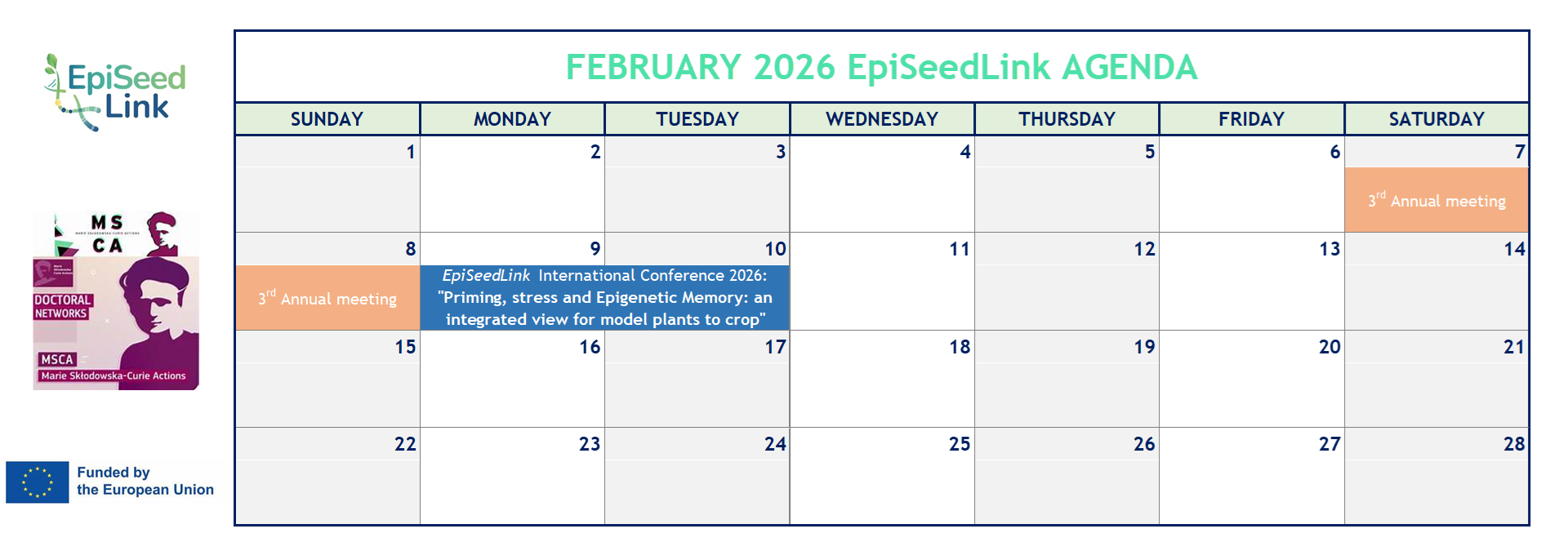
This month brings an exciting moment for our community. We will be travelling to Amsterdam for the third and final meeting of our project, where the students will present the full results of their research. Over these sessions, we will look back at the scientific progress achieved, summarise the main conclusions, and reflect on the milestones reached throughout the programme.
After the internal meeting, our activities will continue at the EpiSeedLink International conference organised within the project framework entitled “Priming, stress & epigenetic memory: an integrated view from model plants to crops”.
More than 150 scientists from around the world will join us in Amsterdam to share their latest findings, exchange ideas, and explore new directions for future collaboration.
It will be a unique opportunity to connect, discuss, and celebrate the collective achievements of our field. We will discussed about:
- seed to seedling transition
- environment and stress
- Epigenetic memory and chromatin regulation
- Crop breeding and priming
We look forward to an inspiring month filled with science, discussion, and community.
Frontal Image by <a href=”https://www.freepik.es/psd-gratis/plano-agenda-negocios_2573813.htm#fromView=search&page=4&position=23&uuid=d5e63b44-d8fd-4e19-8c93-c5f53e0a6f84″>Imagen de rawpixel.com en Freepik</a>
Meet Our PhD Fellows: Sharing Their Passion for Science_7
Our EpiSeedLink PhD students are stepping in front of the camera to share their passion for science and give you a glimpse into their research within the project.
Training in Science Communication
As part of their training in science communication and public engagement, our EpiSeedLink PhD students are creating short videos to present their research and key scientific topics from the project.
Video Series
These videos will be posted every two weeks on EpiSeedLink’s social media channels, giving the public a front-row view of the research questions and discoveries of the next generation of scientists.
Seventh Video Spotlight
The seventh video features Paolo L. Prodrigues Silva, PhD student at the Centro Nacional de Biotecnología (CNB_CSIC) in Madrid, who explains the secret memory of plants.
Plants carry a quiet kind of memory, etched not in words, but in the way they grow, adapt, and respond to the world around them. Every drought, every sunrise, every touch leaves a trace that shapes their future resilience. It’s a reminder that even the silent ones are always learning.
Do you want to learn more about the secret memory of the plants?
If yes, click on this link and watch the video¡
The video was recorded in Portuguese with subtitles in English.
You can watch all videos in our YouTube channel: https://www.youtube.com/@episeedlink2021/
Frontal Image designed by Freepik
Meet Our PhD Fellows: Sharing Their Passion for Science_6
Our EpiSeedLink PhD students are stepping in front of the camera to share their passion for science and give you a glimpse into their research within the project.
Training in Science Communication
As part of their training in science communication and public engagement, our EpiSeedLink PhD students are creating short videos to present their research and key scientific topics from the project.
Video Series
These videos will be posted every two weeks on EpiSeedLink’s social media channels, giving the public a front-row view of the research questions and discoveries of the next generation of scientists.
Sixth Video Spotlight
The sixth video features Stefania Paltrinieri PhD student at the Université Clermont-Auvergne, (UCA), who explores how plants decide the best moment to germinate and the molecular mechanisms involved.
Did you know why and how plants decide to germinate?
Learn about it by watching the video at this link
The video was recorded in Italian with subtitles in English.
You can watch all videos in our YouTube channel: https://www.youtube.com/@episeedlink2021/
Frontal Image designed by Freepik
EpiSeedLink – Marie Curie Voices: Episode 2_Podcast Series
️✨ We are very pleased to announce the launch of the Second Episode of our 5-episode series EpiSeedLink – Marie Curie Voices, a brand-new podcast series created by our talented Marie Skłodowska-Curie fellows.
This podcast takes you behind the scenes of the MSCA experience, exploring the personal stories, challenges, and aspirations of young researchers who are shaping the future of science across Europe.
In this episode, “Advising the Future: Insights from an EpiSeedLink Mentor”, Nora Pasquali Medici and Maira Marins Dourado interview one of the project’s External Advisors, Alex Pecinka.
They discuss:
- his role within the EpiSeedLink Programme
- how EpiSeedLink fits into the broader research landscape and aligns with his own work
- the advice he offers to current Fellows
- his vision for the future of EpiSeedLink
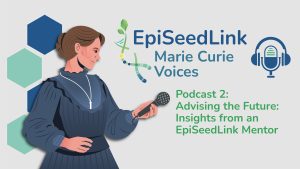
Listen to Episode 2 on YouTube or Spotify
Why Listen?
This episode offers a concise look at how mentoring supports early‑career researchers in EpiSeedLink. Moreover, the Advisor’s perspective on the programme, the skills young scientists need, and his vision for the project’s future.
It’s an insightful listen for anyone interested in research training and the MSCA experience.
Stay tuned for the upcoming episodes to hear more¡
Meet Our PhD Fellows: Sharing Their Passion for Science_5
Our EpiSeedLink PhD students are stepping in front of the camera to share their passion for science and give you a glimpse into their research within the project.
Training in Science Communication
As part of their training in science communication and public engagement, our EpiSeedLink PhD students are creating short videos to present their research and key scientific topics from the project.
Video Series
These videos will be posted every two weeks on EpiSeedLink’s social media channels, giving the public a front-row view of the research questions and discoveries of the next generation of scientists.
Fifth Video Spotlight- The invisible power of epigenetics: Life rewritten
The fifth video features Martina Curci PhD student at the Centro de Biotecnología y Genómica de Plantas (CBGP), who explores epigenetics through practical examples, showing how DNA works beyond the genetic code alone.
Did you know that our choices and environment can influence how our genes are expressed?
Learn about it by watching the video at this link
The video was recorded in Italian language with subtitles in English
You can watch all videos in our YouTube channel: https://www.youtube.com/@episeedlink2021/
Frontal Image designed by Freepik

Merry Christmas and a Very Happy New Year 2026
🎄 Season’s Greetings from the EpiSeedLink Team 🎄
As we reach the end of another inspiring year of collaboration, discovery, and shared progress, the members of the EpiSeedLink project would like to extend our warmest wishes to everyone, our partners, our colleagues, our supporters, our web’s visitors…
✨ Thank you for your continued engagement, your curiosity, and your contributions to advancing our scientific mission.
✨ Thank you for following our work and supporting our mission to advance plant epigenetics and seed resilience.
✨ 2025 has been a year of growth, strengthened networks, and exciting achievements across our consortium.
✨ We look forward to 2026 with enthusiasm, ready to continue exploring, learning, and innovating together.
Wishing you a joyful holiday season and a bright start to the New Year. Here’s to an inspiring and productive 2026 together.
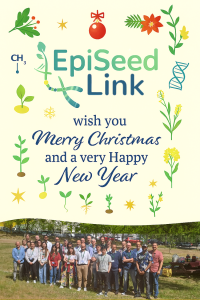
Frontal Imagen by <a href=”https://www.freepik.es/vector-gratis/elegante-tarjeta-felicitacion-feliz-navidad-feliz-ano-nuevo_6160220.

Provisional Agreement on New Genomic Techniques (NGTs) in the EU
EU Institutions Reach Provisional Agreement on New Genomic Techniques (NGTs)
On 3 December, the EU Presidency and European Parliament concluded negotiations on a long-awaited regulation for new genomic techniques (NGTs) in plant breeding. The agreement introduces a differentiated framework intended to balance innovation, sustainability, and market access.
Key provisions include:
- Two-tier classification:
- Category 1: NGT plants deemed equivalent to conventional breeding, exempt from GMO legislation.
- Category 2: More complex modifications subject to GMO rules, authorisation, traceability, and labelling.
- Labelling rules: NGT-1 plants will not be labelled (except seeds), while NGT-2 plants will carry stricter requirements.
- Patent transparency: Applicants must disclose existing or pending patents; safeguards aim to prevent market concentration and ensure fair access.
- Governance: A patent monitoring group and EU code of conduct will oversee licensing practices and breeder access.
- Exclusions: NGTs remain prohibited in organic food production; member states may opt out of cultivating Category 2 plants.
This agreement marks a significant step in shaping Europe’s biotechnology policy, with implications for farmers, breeders, and the wider agrifood sector. While industry stakeholders welcome the enabling framework, environmental groups caution against risks of dependency on large agrochemical companies.
Source: Council, Parliament agree on long-awaited regulation for new genomic techniques | Science|Business
Meet Our PhD Fellows: Sharing Their Passion for Science_4
Our EpiSeedLink PhD students are stepping in front of the camera to share their passion for science and give you a glimpse into their research within the project.
Training in Science Communication
As part of their training in science communication and public engagement, our EpiSeedLink PhD students are creating short videos to present their research and key scientific topics from the project.
Video Series
These videos will be posted every two weeks on EpiSeedLink’s social media channels, giving the public a front-row view of the research questions and discoveries of the next generation of scientists.
Fourth Video Spotlight
The fourth video features Clarisse Zigue PhD student at the Sorbonne University, who explores light priming in dark-adapted seedlings. She is interested in triggering the memory of dark-grown seedlings to help them cope better with the transition to light.
To characterise the acquisition of light memory, she is focusing on identifying the genes and pathways involved in this process.
Watch the video at this link
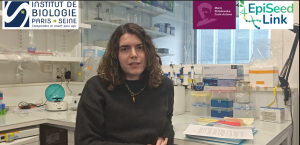
You can watch all videos in our YouTube channel: https://www.youtube.com/@episeedlink2021/
Frontal Image designed by Freepik